
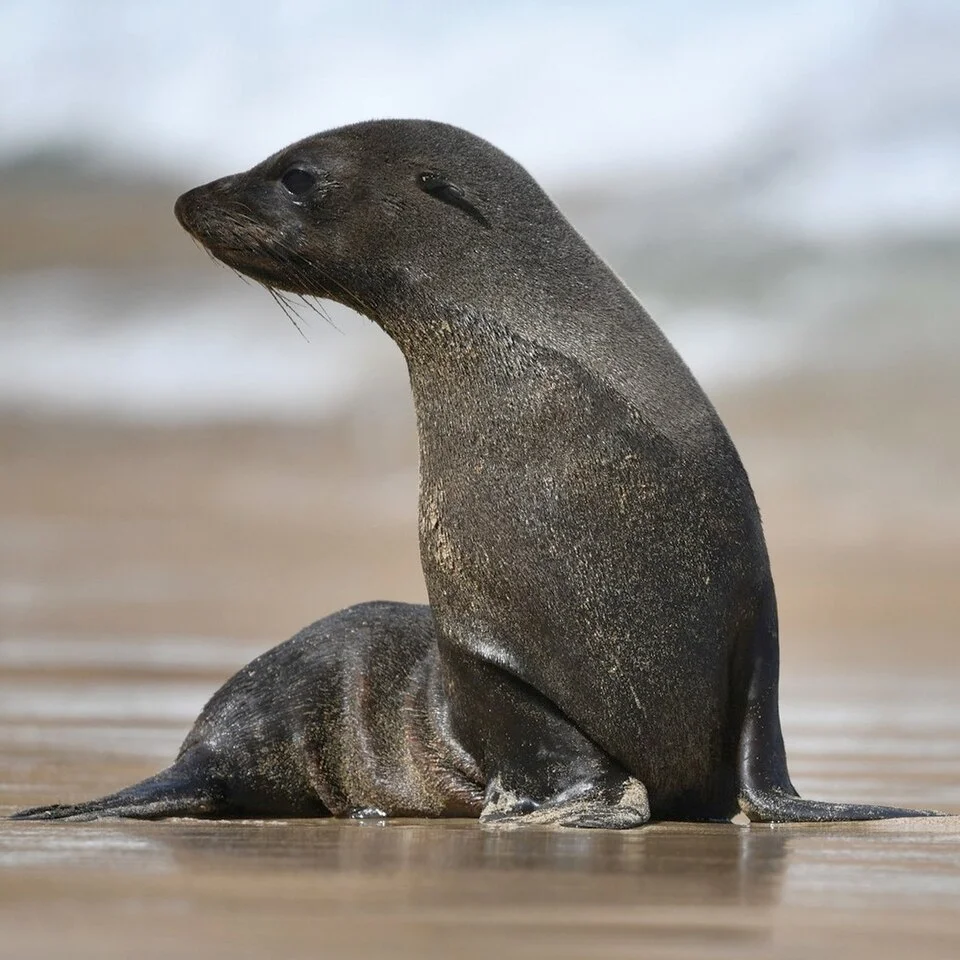
Juan Fernández fur seal: from near extinction to over 180,000
Hunted almost to extinction and rediscovered in 1965, it numbered some 183,000 animals in the 2021 census: one of the great recoveries in the Pacific.
The Juan Fernández fur seal (Arctocephalus philippii) is the only pinniped endemic to Chile and the protagonist of one of the most remarkable recoveries in the South Pacific. It lives on Robinson Crusoe, Santa Clara and Alejandro Selkirk islands, and in smaller numbers on the Desventuradas Islands.
From collapse to rediscovery
In the 18th and 19th centuries, sealers hunted it so intensively that by the early 20th century the species was thought to be extinct. It was rediscovered in the archipelago in 1965. The first counts, around 1970, spoke of barely a few hundred animals, with figures that vary by source. Free from hunting pressure, the colony began to grow at a pace that surprised researchers.
Unprecedented growth
For decades the population grew at double-digit annual rates, something extraordinary for a marine mammal. The 2021 census, funded by Chile's Fisheries and Aquaculture Research Fund (FIPA) and carried out with drones, counted about 183,000, including some 71,000 pups: twice as many as in the previous full census, some twelve years earlier.
Alejandro Selkirk holds 59% of the population, Robinson Crusoe 28% and Santa Clara 13%. Growth, however, is slowing: the same study concludes that the growth rate is falling on all three islands, especially on Robinson Crusoe and Santa Clara, where space in the rookeries is starting to run out. In 2015 the IUCN moved the species to Least Concern.
Biology and behavior
Adult males reach about 140 kg and around 2 meters in length; females weigh 45 to 48 kg and measure 1.4 to 1.5 meters. Pups are born between late October and December, with black fur that lightens over the years.
Females feed far offshore, on trips averaging about 336 km. They hunt mainly at night and in shallow water, less than 10 meters deep, chasing lanternfish and squid, which rise toward the surface in the dark. That is why, according to the 2021 census, the fur seal barely competes with local artisanal fishing.
Its current threats are entanglement in fishing nets and negative interactions with dogs. In the early 1990s, an intestinal parasite infection also killed some 60 pups.
On the rocky shores of Robinson Crusoe it is common to see them resting. If you come across them, keep your distance and don't feed them: their recovery shows that conservation, when it arrives in time, works.
Experience it on the island
- Diving on Robinson Crusoe Island
Rocky walls, caves and wrecks, with Juan Fernández rock lobster, fur seals and endemic fish.
Keep reading
- Artisanal Fishing Jasus frontalis: the clawless lobster of Juan Fernández
Found only around Juan Fernández and the Desventuradas, it is caught with traps, a closed season, a minimum size and a traditional system of family “marcas”.
- Flora Bramble and maqui: the invaders smothering the native forest
Bramble arrived in 1927 and, together with maqui, is invading the forest of Robinson Crusoe, home to plants found nowhere else in the world.
- Heritage Biosphere Reserve: what it protects and what's missing
Much of the archipelago is a National Park and a UNESCO Biosphere Reserve, with endemic flora and fauna. On land, invasive plants keep spreading.
- Flora Tree ferns: the high-elevation forest of Robinson Crusoe Island
Thyrsopteris elegans, the last survivor of its family, and Dicksonia berteroana shape the high-elevation forest, one of the island's most fragile habitats.